
De mus zonder steert
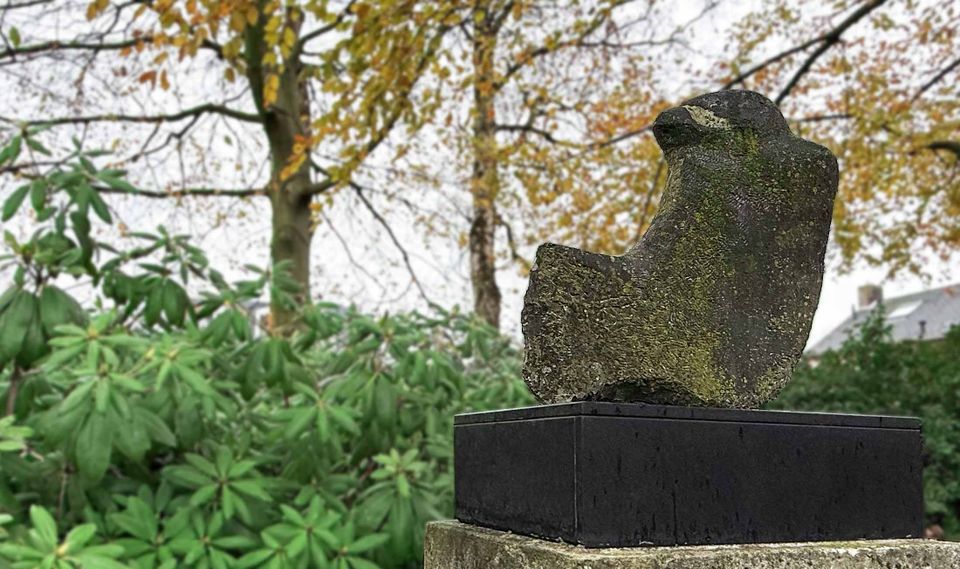
Just a stone’s throw from the busier Sniederslaan, you’ll find an oasis of greenery and tranquillity: the Charles Baelemanshofke. A lovely spot to take a breather on a bench and enjoy this cosy park. But there’s more. Tucked away amongst the greenery, you’ll discover a unique work of art: ‘ De mus zonder steert’.
Some facts at a glance
Designer: Jan van der Putten
When: 2003
Why: to mark the opening of the Charles Baelemanshofke
Discover its story
The grey statue, set amidst greenery, exudes simplicity. The st…
Just a stone’s throw from the busier Sniederslaan, you’ll find an oasis of greenery and tranquillity: the Charles Baelemanshofke. A lovely spot to take a breather on a bench and enjoy this cosy park. But there’s more. Tucked away amongst the greenery, you’ll discover a unique work of art: ‘ De mus zonder steert’.
Some facts at a glance
Designer: Jan van der Putten
When: 2003
Why: to mark the opening of the Charles Baelemanshofke
Discover its story
The grey sculpture, set amidst greenery, exudes simplicity. It depicts a sparrow without a tail perched on a money chest. The Hoogeloon-based artist Van der Putten drew inspiration for the design of this sculpture from a poem in the collection ‘Bij de gratie Gods’ by Charles Baelemans (1898–1982). In that collection, the poet places the artist’s simplicity above the materialism of the world: ‘it was just a little sparrow without a tail, just a little ball of feathers.’
Who was Charles Baelemans?
Charles Baelemans came to Bladel as an orphan from Belgium, where he settled on Sniederslaan. Charles worked hard. He was a cigar maker and, together with his wife Anna, ran the thriving café De Drie Hoefijzers. He was also known as a poet and was a writer and actor with the Bladel theatre company.