
In the early 1970s, the … was developed in Hapert .
In 1975, the first houses were built and it was time to name the planned streets.
Many names were suggested, but after careful consideration, the local council decided to name two streets after war victims, following the example of a street in Hoogeloon that had previously been named after a war victim.
The two streets were named Antoon Schildersstraat and Van Joseph van Dingenenstraat.
Antoon Schildersstraat.
Antoon Schilders was born in 1924 in Dalem, Hapert. When the…
In the early 1970s, the … was developed in Hapert .
In 1975, the first houses were built and it was time to name the planned streets.
Many names were suggested, but after careful consideration, the local council decided to name two streets after war victims, following the example of a street in Hoogeloon that had previously been named after a war victim.
The two streets were named Antoon Schildersstraat and Van Joseph van Dingenenstraat.
Antoon Schildersstraat.
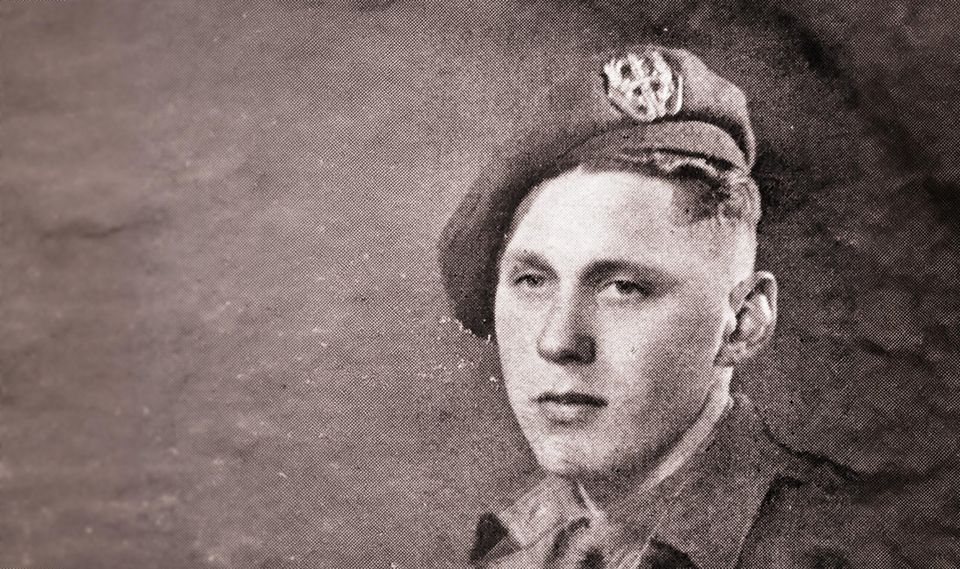
Antoon Schilders was born in 1924 in Dalem, Hapert. He was therefore sixteen years old when the Second World War broke out. In 1942, many young men were conscripted to work in the war industry in Germany. Many young men tried to avoid this forced labour by going into hiding. Antoon Schilders was one of them. However, at the end of February 1944, he was arrested by the Germans and sent via Camp Vught to the Amersfoort concentration camp. From there, he was put to work at Soesterberg Air Base.
On 8 March 1944, the ‘German’ airfield was the target of a heavy Allied attack carried out by 47 B-26 bombers. At least sixteen soldiers, two ‘Reich Germans’ and 20 Dutch civilians, including eight labourers from Amersfoort Camp, lost their lives during this attack.
Antoon Schilders was wounded during the attack and was taken to a hospital in Utrecht, where he died on 12 March 1944.
Joseph van Dingenenstraat.
Joseph was born on 3 July 1926 in Hapert. As a conscript, he joined the Royal Netherlands Army in Nijmegen in the spring of 1947, where he was assigned to the Staff Company of the 4th Assault Regiment.
Due to the outbreak of revolutionary violence during the Indonesian struggle for independence, Joseph was sent to the Dutch East Indies to fulfil his military service and help restore order and colonial authority. On 14 May 1947, following two and a half months’ training, he set sail for the East aboard the ‘Volendam’. Just under a month later, Joseph went ashore at the port of Belawan on Sumatra and was stationed on the eastern outskirts of Medan.
During the Second Police Action, from 19 December 1948 to 5 January 1949, Joseph and his unit marched northwards from Padang towards Fort de Kock (now Bukittinggi) in the interior. It was a gruelling three-day march through the mountains, during which the Dutch were severely delayed by roadblocks left behind by the revolutionaries. Following the capture of Fort de Kock, the Gadoet airfield was secured and the Anaï Gorge cleared. On 26 December, Fort van der Capellen was also captured. Following the operation, the assault troops remained stationed at Fort de Kock and patrolled the immediate vicinity.
On the face of it, the operation was a success, but it only became apparent afterwards that the revolutionary army had consistently avoided confrontation with the Dutch. They then intensified their guerrilla warfare from the interior, targeting in particular the road from Fort de Kock to Padang, which soon became extremely dangerous due to the countless ambushes and shelling.
On 1 July 1949, Joseph was killed in Fort de Kock as a result of one of these new incidents of violence. He was 22 years old and was laid to rest at the Dutch war cemetery in Leuwigajah, Cimahi.
De Vliegert.
When the municipal council decided on these two street names, the name ‘de Vliegert’ was also briefly explained: the area known as de Vliegert used to contain a thick layer of sand. This sand was gradually excavated in years gone by. As a result of this excavation, a ‘loose and dry’ top layer remained, which would blow away. This sand was called ‘flying sand’, hence, apparently, the name ‘de Vliegert’.
.