
Karel de Eenvoudige en Dirk I
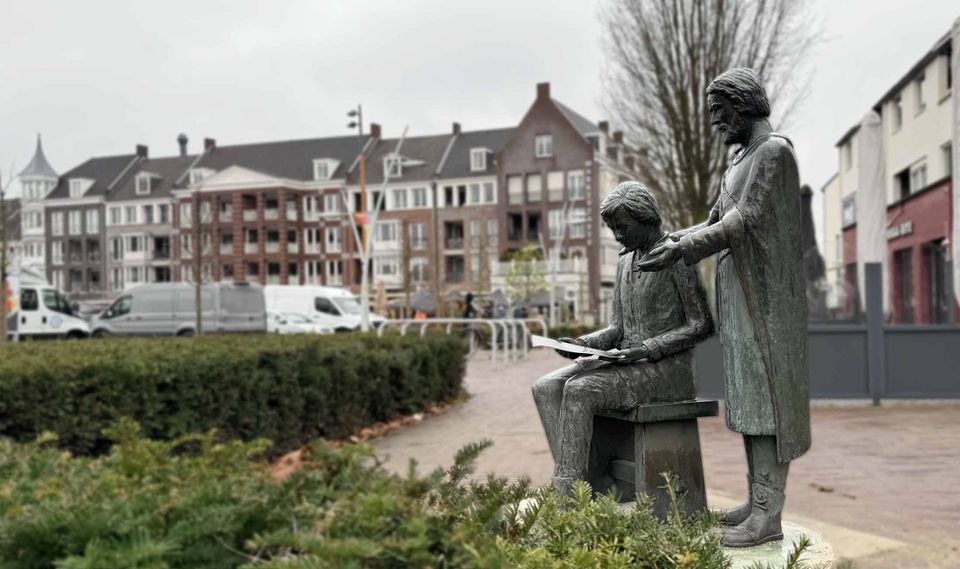
On the south side of the Markt, it can get quite busy with schoolchildren and passing cars. But if you stop on the pavement and take a moment, you’ll discover a bronze statue of two men who pay no heed to the traffic. They are Karel de Eenvoudige en Dirk I.
Some facts at a glance
Designer: Wim Gubbels
When: 1992
Why: The Bladel and Netersel Cultural Fund Foundation wanted to enrich the community through cultural expression. This statue was their first achievement.
Discover his story
. The year is 922. It is Dirk I, Count of Holland…
On the south side of the Markt, it can get quite busy with schoolchildren and passing cars. But if you stop on the pavement and take a moment, you’ll discover a bronze statue of two men who pay no heed to the traffic. They are Karel de Eenvoudige en Dirk I.
Some facts at a glance
Designer: Wim Gubbels
When: 1992
Why: The Bladel and Netersel Cultural Fund Foundation wanted to enrich the community through cultural expression. This statue was their first achievement.
Discover his story
The year is 922. Dirk I, Count of Holland, is sitting on a stool, looking at a (deed of) gift. The Frankish King Charles the Simple stands beside him and has just handed him the document. In that year, as a reward for his support of the king, Count Dirk was granted the county of Holland and the church of Egmond as a fief. According to one source, this signing – a significant moment in the history of Holland – took place at Pladella Villa, a castle in Bladel. One could therefore argue that Bladel stood at the cradle of the County of Holland. No one can say with certainty exactly where that villa stood, as nothing remains of the castle today.
Another interesting fact
: if you look closely, you’ll see a Latin phrase on the deed of gift: “actum pladella villa feliciter. amen”. This means: “drawn up at Pladella Villa, with good fortune. amen”.