
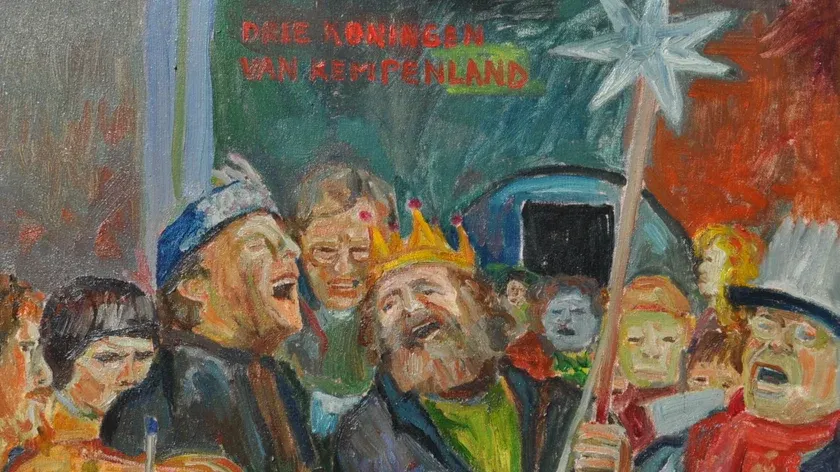
Until Epiphany, around thirty highlights of Kempen village scenes, heathland landscapes and portraits from the artistic legacy of Jan van der Heijden (1924–1990), who was born and raised in Netersel , will be on display at the Kempenland van Oktober venue in Bladel.
From a young age, Jan van der Heijden had a keen interest in painting, and at the age of 16…
Until Epiphany, around thirty highlights of Kempen village scenes, heathland landscapes and portraits from the artistic legacy of Jan van der Heijden (1924–1990), who was born and raised in Netersel , will be on display at the Kempenland van Oktober venue in Bladel.
From a young age, Jan van der Heijden had a keen interest in painting, and at the age of 16 he produced his first fully-fledged painting. However, he was destined to take over the farm from his father, Fonske van der Heijden, who was executed by the SS on 20 September 1944 for helping a pilot who had been shot in the back three days earlier whilst landing by parachute during Operation Market Garden. Due to the unexpected takeover of the farm, it would be well into the 1970s before he really took up painting again, after several heart attacks had forced him to stop working. A close friend from the war had by then converted a former stable on the farmyard into a studio. It was particularly in 1978 and 1979 that he enjoyed his heyday as a painter there, although he also frequently painted village scenes and landscapes in the surrounding area. For this, he would take along the outdoor easel of Jozef Gindra (1862–1938), who, like Van Gogh, for example, often chose simple country life as his subject, just as Jan himself did. He also produced many portraits, including one group portrait by which many people in de Kempen will remember him: as King Melchior with a spinning star, together with Caspar and Balthazar, forming the three kings. During their annual musical tour through de Kempen , they would collect money for the missions.
When
- Daily until 6 January 2027 09.00 – 19.00